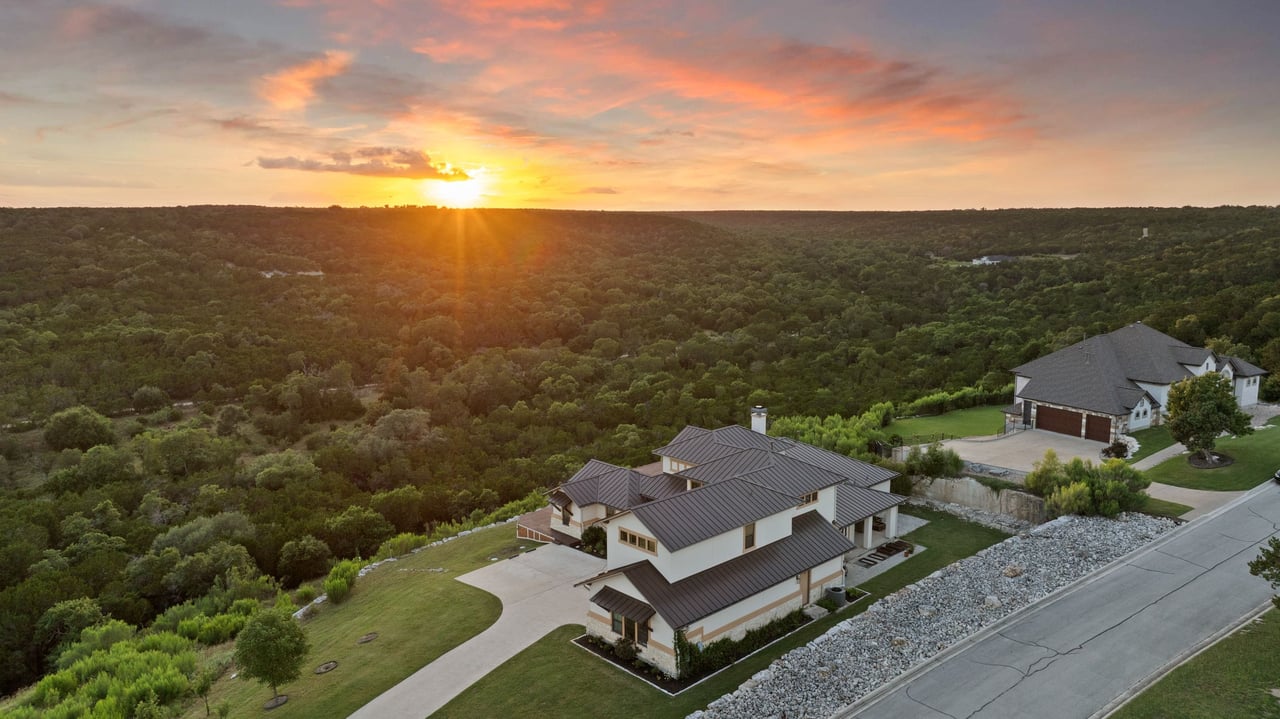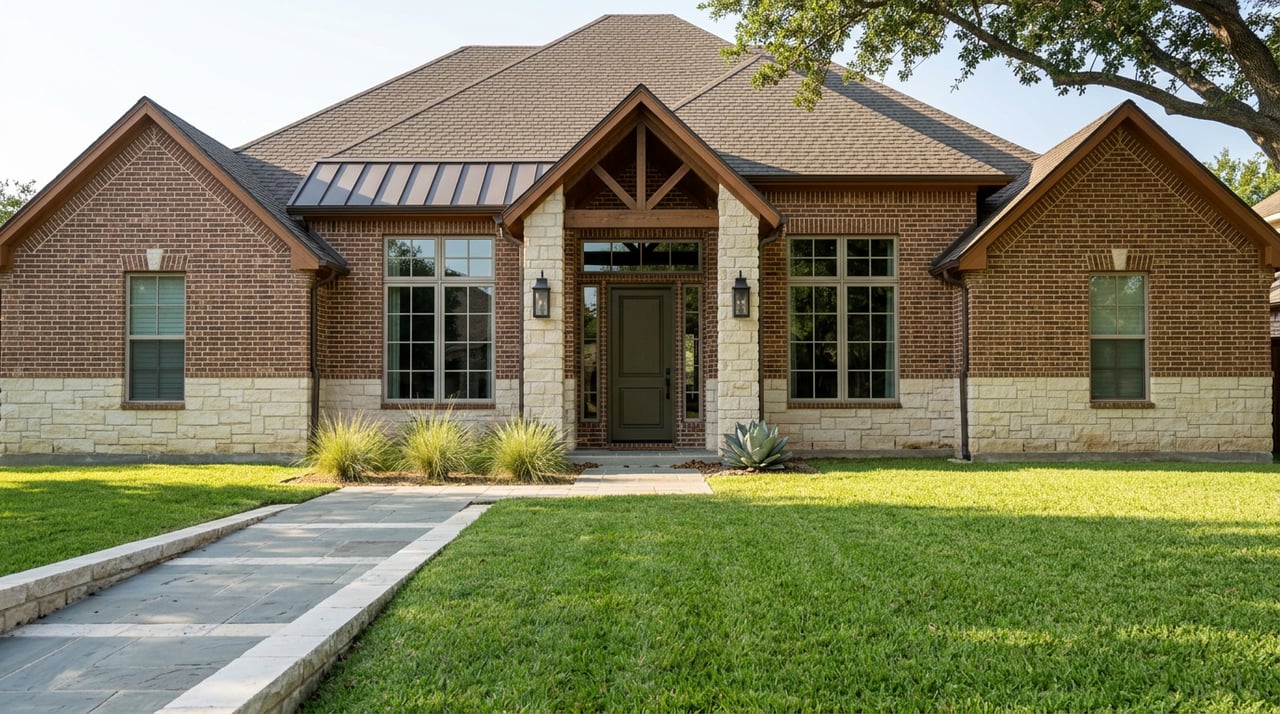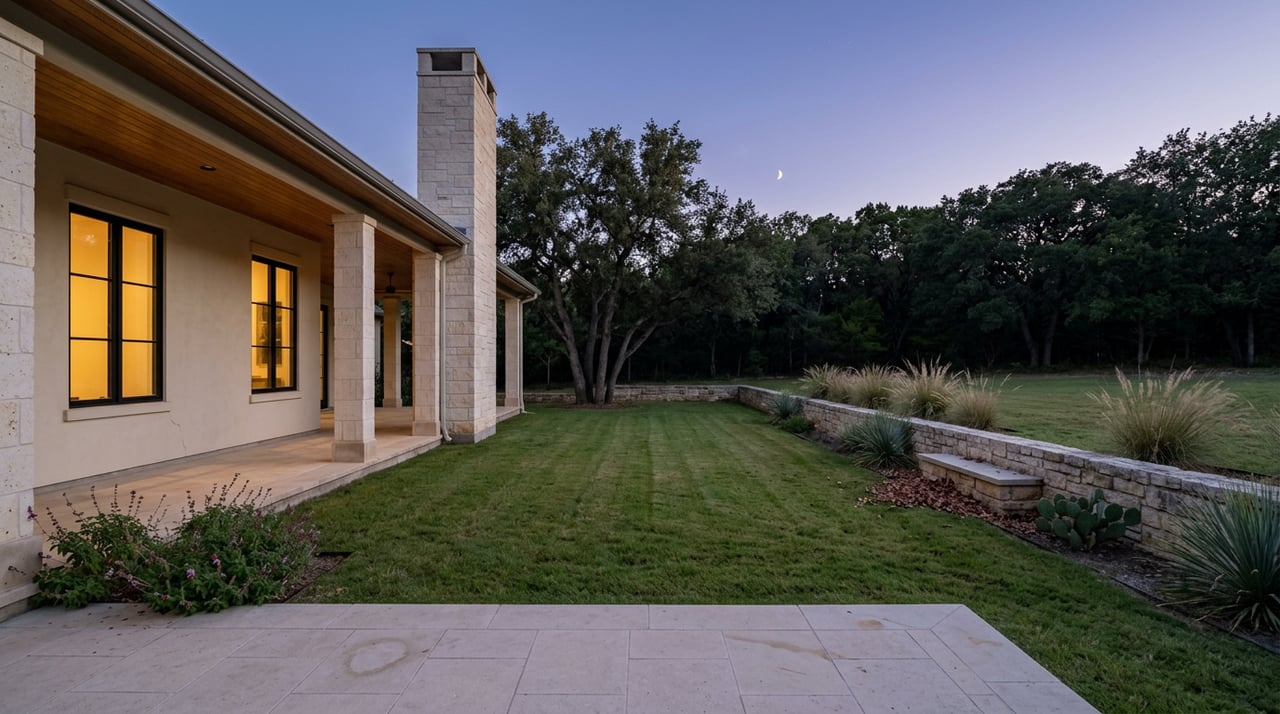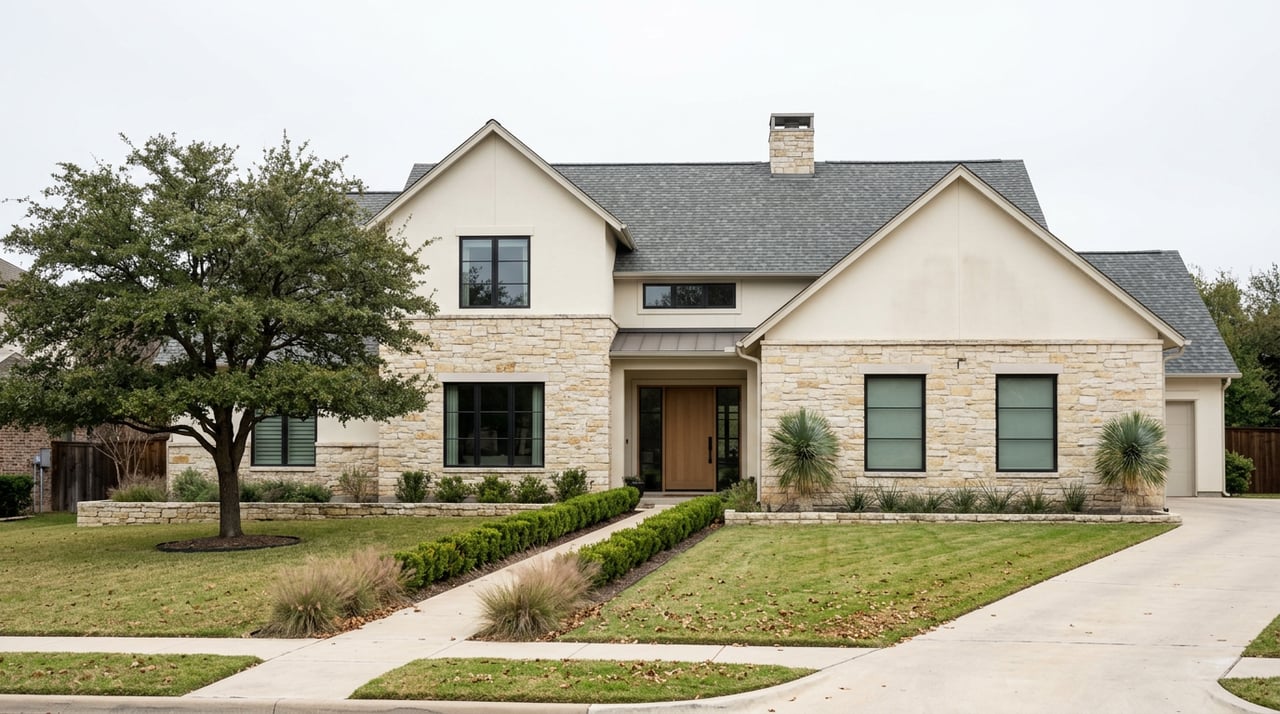
Two calls came in the same week this summer. One buyer wanted to know why a house in Sun City was listed at $340,000 when every article she'd read said Georgetown homes run closer to half a million. The other wanted to know why a new build in Wolf Ranch was priced at $630,000 when the same articles told him Georgetown was "affordable compared to Austin." Both were looking at the same city. Both were quoting the same median. Neither number described the house they were actually about to make an offer on.
That's not a coincidence. It's the math.
Resideline tracked 279 closed sales in Georgetown over the trailing six months through August 2026 and landed on a median closing price of $489,900, with the middle half of those sales closing somewhere between $375,000 and $619,900. A $245,000-wide band for the "middle half" of a market isn't noise. It's a signal that the number is averaging together products that were never competing for the same buyer in the first place.
A citywide number built from three different housing products
Georgetown's median exists because a Del Webb retirement community, a Hillwood-built family subdivision, and a decades-old golf neighborhood all happen to share a mailing address. Pull them apart and the picture changes.
Sun City is the biggest single reason the citywide number sits where it does. Built by Del Webb starting in 1995, the age-restricted 55-plus community has grown past 7,500 homes with roughly 10,000 planned at full build-out, and resale pricing on the standard Del Webb floor plans still starts in the low $300s. That's not a small pocket of below-median inventory. It's one of the largest active-adult communities in Texas, and every one of those closings gets folded into the same "Georgetown median" a relocating family sees on a national portal, even though a buyer under 55 legally cannot purchase there as a primary resident.
Wolf Ranch sits at the other end. The 1,120-acre Hillwood development is Georgetown's flagship new-construction community, built out toward roughly 2,600 single-family homes with a median list price around $630,000 as of June 2026. New construction there carries a cost line that Sun City and the city's older subdivisions don't: two stacked Williamson County Municipal Utility Districts, MUD #28 and MUD #29, financing the roads, water, sewer, and parks that came with building a neighborhood from raw land.
And then there's Berry Creek, an established golf-course neighborhood on Georgetown's north side that sits entirely inside city limits with no MUD or PID layered on top at all.
Here's what that actually looks like side by side.
| Sun City | Wolf Ranch | Berry Creek | |
|---|---|---|---|
| Entry point | Low $300s (resale) | Low $400s (new construction) | Mid $300s |
| Buyer eligibility | 55-plus household member required | Open | Open |
| Tax structure | No MUD | Two MUDs (#28, #29) | No MUD or PID |
| Effective tax rate | City/county/school base only | Roughly 2.47% (2024) | Roughly 1.8% |
| HOA | About $1,200 a year | Included in community dues | Golf club membership separate from HOA |
| High school (GISD) | N/A for most residents | Varies by section, verify assignment | Georgetown High |
The tax line that never shows up in the headline price
Municipal utility districts aren't unique to Wolf Ranch. Williamson County has used them for years to let developers finance infrastructure ahead of a tax base existing to pay for it, and Community Impact's reporting on the practice found that MUD residents in the county typically pay taxes at least 54 percent higher than they would inside standard city limits, with some districts running more than double. Wolf Ranch's own homeowners association confirms the mechanism directly: the two districts fund not just the roads and utilities but the ongoing maintenance of the water, sewer, and park facilities inside the community.
The rate has actually been trending down, from 2.7228% in the 2021 tax year to 2.4691% in 2024, which suggests the debt service is amortizing the way these districts are designed to. But down from higher doesn't mean low. On a $500,000 home, the MUD layer in Wolf Ranch adds somewhere in the range of $2,000 to $3,000 a year compared to a similarly priced home in a Georgetown neighborhood without one.
That gap doesn't show up anywhere in the list price. It shows up in the first escrow statement, and by then the buyer has already waived their option period.
Same district label, different school
Georgetown ISD covers most of the city, and that single label creates its own quiet trap. Berry Creek's homes feed Georgetown High School, not East View, even though both high schools sit inside the same district boundary. A homeowner comparing two GISD-zoned houses can reasonably assume "same district" means "same school," and that assumption doesn't always hold once you're looking at specific sections of newer master-planned communities, where feeder assignments can differ from what a listing sheet implies. The fix isn't complicated: check the current GISD attendance boundary for the specific address before writing an offer, not after.
The mix problem hiding inside "prices are down"
Several of the portals tracking Georgetown this year have reported year-over-year declines, Zillow's home value index down around 11 percent as of mid-2026 and Movoto's per-square-foot pricing down about 2 percent as of August 2026. It's tempting to read that as a softening market, and part of it may be. But a city where a growing share of closings comes from a 7,500-home age-restricted community with a $300s floor doesn't need a single seller to cut their price for the citywide median to fall. It just needs more of the transaction mix to come from Sun City relative to Wolf Ranch and Berry Creek in a given window.
That's the part a headline percentage can't tell you. Whether a specific $500,000 house in Berry Creek is worth less than it was a year ago is a completely different question from whether the city's overall median moved because more retirees closed on resale villas this spring. Both things can be true at once, and only one of them is relevant to a family deciding what to offer on a specific street.
What to check before you anchor to any Georgetown number
- Confirm whether the address sits inside a MUD or PID, and ask for the specific district's current rate rather than a citywide average. Williamson County publishes the actual tax rate worksheets for every district, updated each fall.
- Verify the exact GISD high school and middle school assignment for that address, not just the district name.
- If the community is age-restricted, confirm eligibility before falling for a price point that isn't actually available to your household.
- Ask for a comp set narrowed to the specific section, builder, and vintage rather than a citywide median. A $489,900 median across 279 closings thins out fast once you filter for one neighborhood and one home age.
- Separate the HOA dues from any golf or club membership. In Berry Creek and similar communities, the club is a private arrangement layered on top of, not included in, the standard HOA.
FAQ
Does Georgetown's median price include Sun City? Yes. Sun City's closings are part of every citywide figure reported for Georgetown, and its scale, more than 7,500 homes built, means it carries real weight in that number even though most buyers shopping family neighborhoods will never consider it.
Are Wolf Ranch's MUD taxes temporary? They're structured to decline as the district's infrastructure debt is paid down, and the rate has fallen from 2021 through 2024, but there's no fixed end date published for either district. Treat the current rate as the number to budget against, not a rate you're waiting out.
Why do two similarly priced Georgetown homes have different monthly payments? Tax structure is the most common reason. A home inside a MUD carries an additional layer of ad valorem tax that a comparably priced home in a MUD-free neighborhood like Berry Creek simply doesn't have.
If I'm not looking at Sun City or Wolf Ranch, does any of this matter? It matters most when you're comparing across neighborhoods, since the whole reason the citywide median is misleading is that it averages communities with different eligibility rules, tax structures, and school assignments as if they were one product.
None of this means the citywide number is wrong. It's just answering a broader question than the one most buyers are actually asking. If you're trying to figure out what a specific price point buys you in a specific Georgetown neighborhood, including the tax structure, the school assignment, and whether you're even eligible to buy there, Sherri Farias can walk through the comparison street by street. Let's Connect.