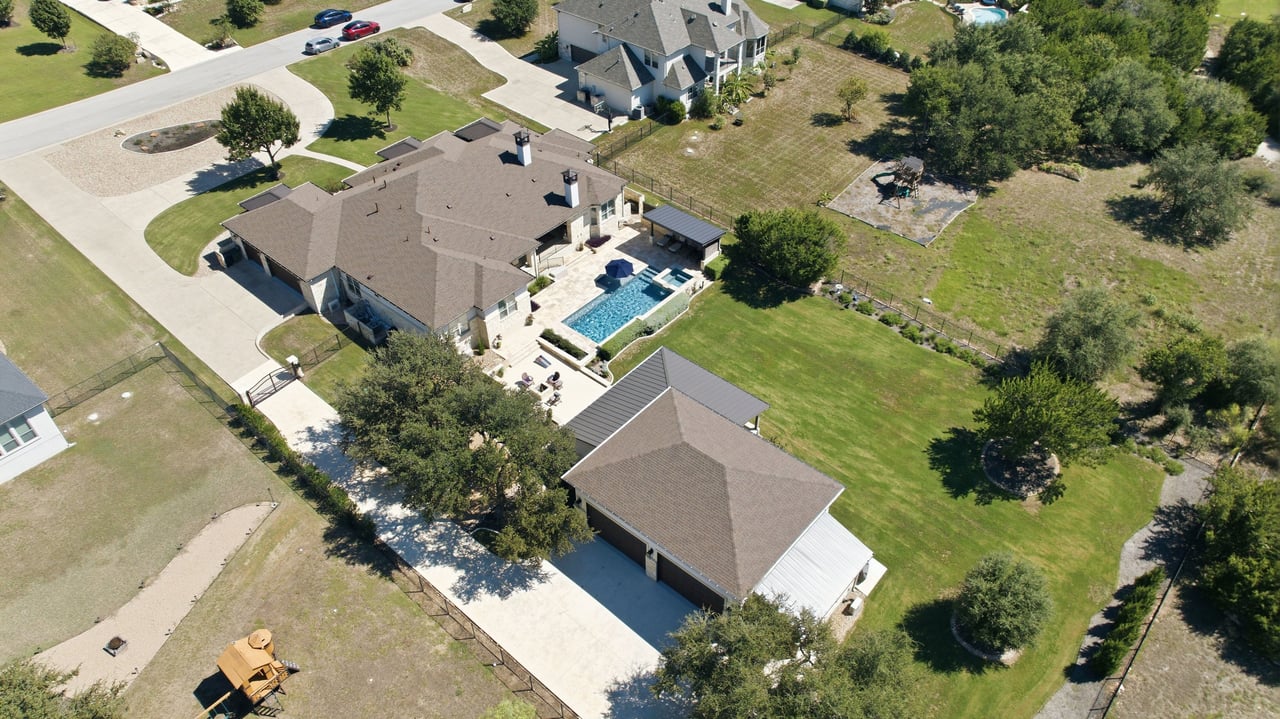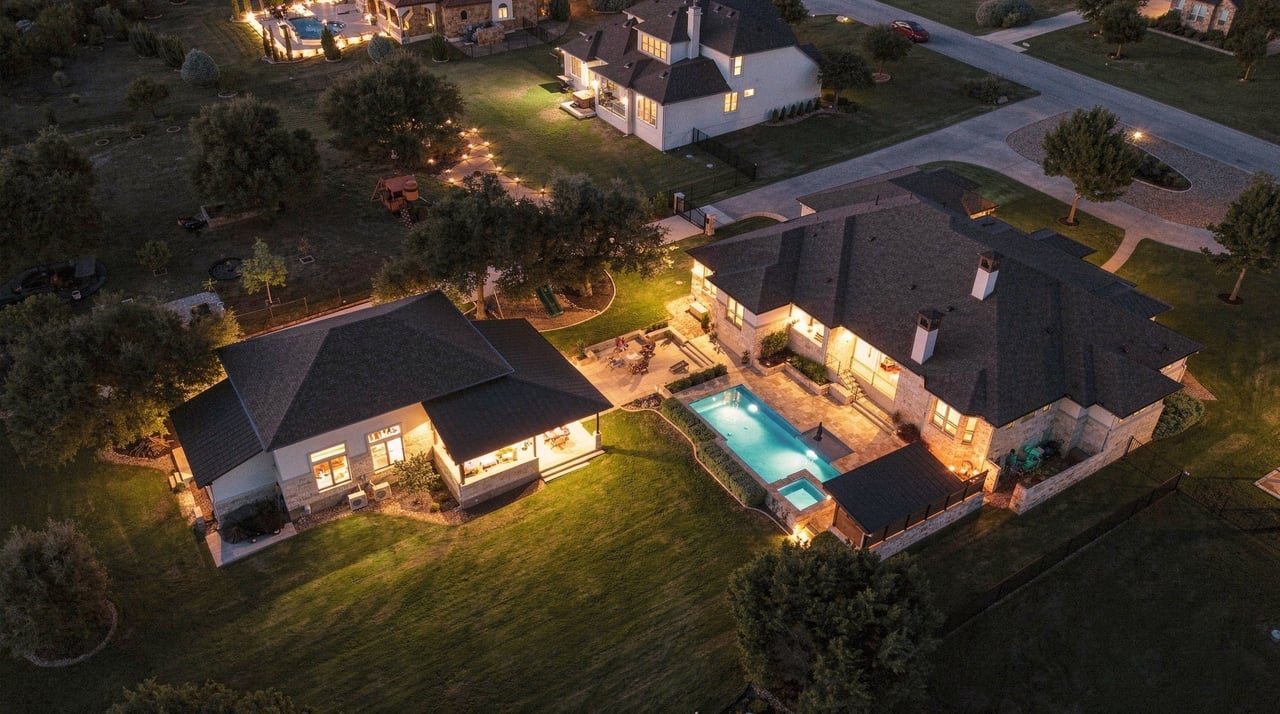
A relocating buyer walked into a Bar W Ranch model this spring and was told the builder would "give" them $25,000. By the time we finished the math on the drive home, roughly $9,000 of that had already been paid back through a higher base price, and another chunk would evaporate if they sold before their third summer in the house.
That is the shape of a 2026 Leander new-construction offer. The headline numbers are real. What they buy you, after the preferred lender, the MUD district, and the January reassessment take their turn, is a different number entirely.
The Sticker Value Is Not The Take-Home Value
Texas builders are leaning hard on rate buydowns and cash credits this summer. A typical package in Leander runs $8,000 to $25,000 in stated value, with Santa Rita Ranch and Bar W Ranch advertising "Flex Cash" of $15,000 to $30,000 aimed at permanently buying rates into the high 4% range. D.R. Horton has been marketing up to $25,000 in closing or flex credits. Design center credits of $10,000 to $25,000 are common on spec homes that have sat 60+ days.
None of that is fake. It is also not free.
The mechanism most buyers miss is that the incentive is tied to the builder's preferred lender, and that lender's base pricing is where the money comes from. The builder is not writing a check out of the profit line. They are steering the loan to a captive channel and rebating a slice of the origination margin back to you at closing. Compare the preferred lender's rate sheet against two outside lenders on the same day, on the same lock length, and the effective cost of the buydown becomes visible.
The same logic applies to base price. On a to-be-built home, the sales counselor has room to move on incentives precisely because there is room in the price. On a completed spec, the price has usually been cut once already, and the incentive stacks on top of what is left.
Month 24 Is The Only Break-Even That Matters
A 2-1 buydown lowers your rate by two points in year one and one point in year two before reverting to the note rate. On a $332,500 loan, that structure delivers roughly $7,500 of payment relief over the 24 months.
The break-even is not a metaphor. If you sell or refinance before month 24, you forfeit the unused portion of the buydown. The escrow account funding the subsidy either returns to the lender or gets applied to principal, depending on how the paperwork was written, and either way it does not follow you to the next house.
Two questions to sit with before you sign:
- What is the probability you refinance inside 24 months if rates drop 75 basis points? For most buyers it is close to 100%.
- What is the probability of a job relocation, second-child upsize, or interstate move before the buydown fully seasons? For relocating professionals in the North Austin corridor, higher than most people admit.
If both answers are meaningful, the buydown is a two-year loan against your own future decisions, not a discount.
The MUD Tax Line Nobody Puts On The Flyer
Here is the delta the model home does not show you. New master-planned communities in Leander typically carry combined tax rates of 2.4% to 2.8% because of the Municipal Utility District overlay funding the roads, water, and amenities you toured on the way in. Established sections of Crystal Falls and Block House Creek land closer to 2.2%.
On a $550,000 home, that 0.3 to 0.6 point spread is $1,650 to $3,300 per year. Every year. For as long as the MUD bonds are outstanding, which is typically 20 to 30 years from community opening.
Set that against a first-year buydown savings of $3,600 to $6,000 and the incentive stops looking like a windfall. It looks like a bridge across the first two tax bills, at which point you own the tax bill and the builder owns your referral.
None of this makes the new-construction path wrong. It makes the comparison to a resale in older Crystal Falls or Larkspur real. Two homes at the same list price, in the same school attendance zone, can carry a $30,000+ swing in total cost of ownership over a decade once MUD, HOA, and buydown mechanics are on the same spreadsheet.
The January After You Close
New-construction tax bills carry a specific trap. During the build, the property sits at an incomplete-improvement value on the county roll. The January after your certificate of occupancy, the appraisal district reassesses at full market value, and your escrow shortage arrives in the mail sometime in October.
Two things soften this if you handle them correctly.
The Texas homestead exemption removes $100,000 from the school district taxable value once filed with the Williamson County Appraisal District. You have until April 30 of the year after closing. Miss the deadline and you lose the entire first-year reduction, which on a $550,000 build is roughly $1,400 in avoidable taxes. The homestead cap then limits future taxable-value increases to 10% per year, which is the mechanism that actually protects you from the reassessment shock in years three and four.
The second lever is escrow analysis. Most preferred lenders escrow the first year against the incomplete-improvement value because that is what the county certifies at closing. Your monthly PITI in year one looks lower than it should. Ask the lender in writing to escrow against the projected full-value tax bill instead. You will pay a higher payment for twelve months and avoid the $3,000 to $5,000 escrow shortage notice next fall. The math is identical either way. The cash-flow surprise is not.
What To Ask Before You Sign An Earnest Money Contract
The questions that separate a good incentive from a bad one are not the ones the sales counselor volunteers. Bring these to the design center appointment, not to the closing table.
- What is the base price on this floor plan and homesite without the incentive package attached? Ask for both quotes in writing.
- What rate can I get from your preferred lender today on a 30-day lock, and what does the same lender quote a walk-in customer at the same credit tier?
- What is the projected full-value tax bill on this address for the tax year after closing, using the community's current combined rate, and will you escrow against that number?
- Which builders in this community are currently offering closing credits on standing inventory versus to-be-built, and how long has each spec been complete?
- What is the MUD's current bond schedule, and where in the amortization is the district? A community five years from bond payoff is a materially different tax picture than one five years in.
- If I sell or refinance in month 18, what happens to the unfunded portion of the buydown?
A buyer's agent with active builder relationships in Leander should be able to answer four of these without picking up the phone. If they cannot, that is the first data point in your negotiation.
FAQ
Are builder incentives negotiable on top of what's advertised?
Sometimes. On to-be-built homes in early phases, rarely. On specs that have been standing 60+ days, often. On specs that have been standing 90+ days in a community with an inventory backlog, almost always. The lever is usually additional closing credits or a design center upgrade rather than a base-price cut, because base-price cuts reset the comparables the builder uses to price the next release.
Does the preferred lender requirement mean I have to use them?
You can walk away from the preferred lender, but you typically walk away from the incentive at the same time. The workable move is to use the preferred lender for the incentive, negotiate the base price aggressively before the incentive is applied, and refinance out of the preferred lender's rate when the broader market gives you 75 basis points of room. That converts the incentive into a discount and the buydown into a bridge.
Is it better to buy new construction or resale in Leander right now?
It depends on how long you plan to stay and how much of the incentive package survives your holding period. Under three years, resale in an older MUD-free section usually wins on total cost. Over seven years, new construction with a well-negotiated buydown and a properly filed homestead often wins on both cost and maintenance curve. The three-to-seven year window is where the analysis actually matters, and where a buyer's agent earns their fee.
Let's Connect
If you are comparing offers in Bryson, Travisso, Santa Rita Ranch, Bar W Ranch, or one of the newer Crystal Falls sections this summer, the incentive sheet is a starting point, not an answer. I represent buyers through the builder contract, the design center, the walkthroughs, and the first tax bill, and I keep a running read on which communities are moving inventory and which are holding firm. Reach out through Sherri Farias and let's talk through what your specific number actually buys.